
If you’ve furnished a home or office in the Terai, you already know the problem. Summers push past 40°C, the monsoon brings months of heavy humidity, and cheap board covers start bubbling, peeling, or warping within a year or two. Bhairahawa and Rupandehi see this every season. It’s not a durability myth, it’s basic material science: wood-based surfaces absorb moisture, expand, then crack or lift once they dry out again.
Laminate sheets aren’t automatically safe from this. Quality varies a lot between brands, and in a climate this demanding, the difference between a laminate that lasts 10 years and one that fails in 18 months usually comes down to the core material and how well it resists moisture and heat.
Why humidity is the real enemy, not just heat
Heat alone laminates can handle. The bigger issue in the Terai is the humidity swing between the monsoon and the dry season. Furniture surfaces expand when they absorb moisture and contract when they dry out. Do that a few dozen times a year, and any laminate with a weak core will start showing gaps at the edges, warped panels, or a surface that separates from the board underneath.
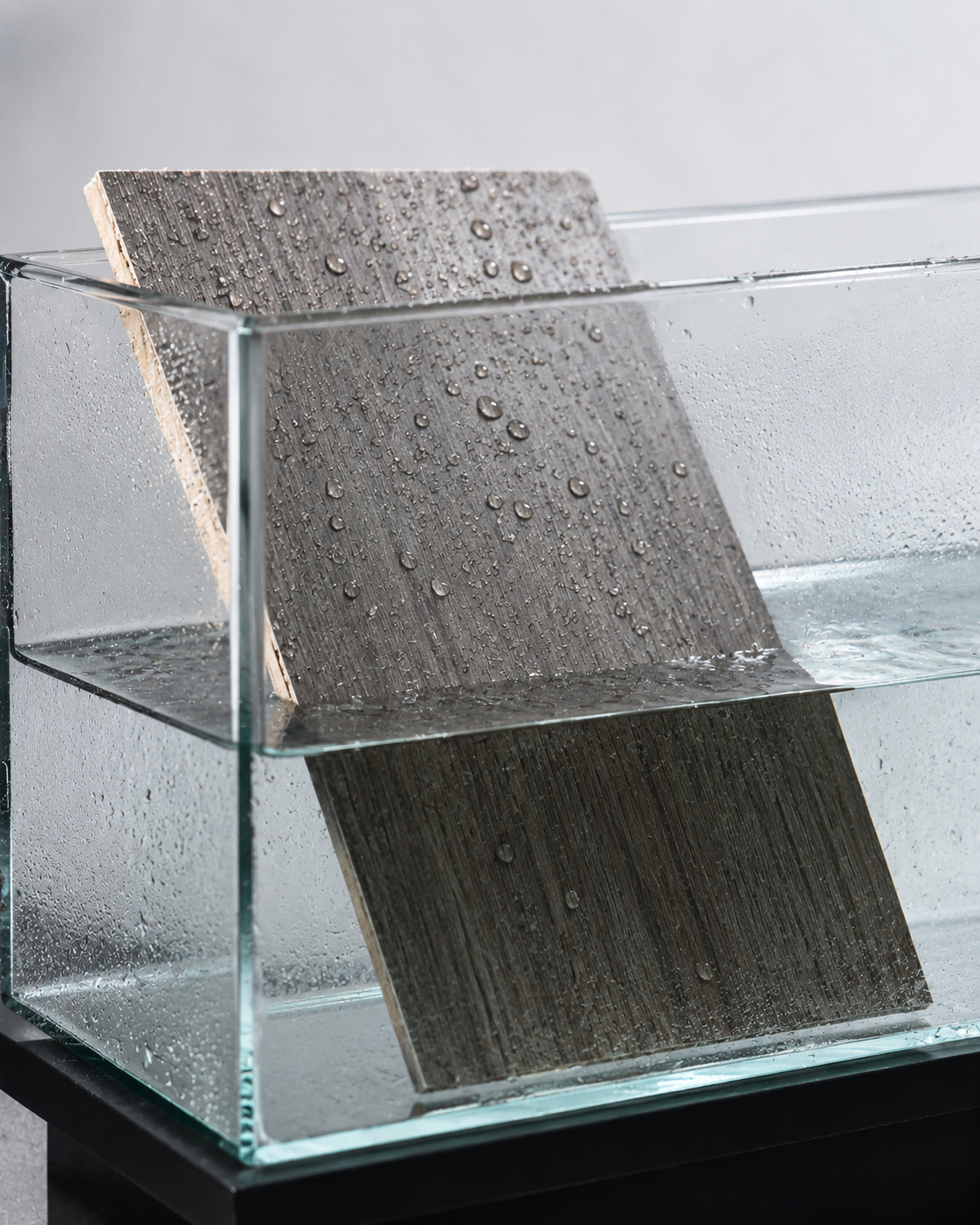
This is why the phenolic core matters more here than in drier parts of Nepal. A 100% phenolic laminate is pressed and cured to resist water absorption at the molecular level, not just sealed on the surface. AmbeLam’s sheets are tested against the boiling water immersion standard and come in well under the ISI limit: 5% max mass increase against a 10% allowance, and 6.5% max thickness increase against an 11.8% allowance. In practical terms, that means less swelling, less warping, and a surface that holds its shape through a full monsoon season.
What to actually check before you buy
If you’re comparing laminate options for a Terai build, ask about these four things specifically:
- Dimensional stability — how much the sheet expands or contracts with moisture. AmbeLam holds to 0.5% against an industry allowance of 0.55%.
- Dry heat resistance — relevant for kitchen shutters and any surface near direct sun through windows. AmbeLam is tested at 180°C.
- Impact and scratch resistance — daily wear matters more in commercial spaces (shops, offices, hotels) but also in busy Terai households.
- ISI certification — the baseline trust signal. It means the laminate has been tested against IS: 2046-1993 Type S, VGS standards, not just marketed as “premium.”
Which finish suits a hot, humid home
Not every finish behaves the same way in daily use once the humidity sets in.
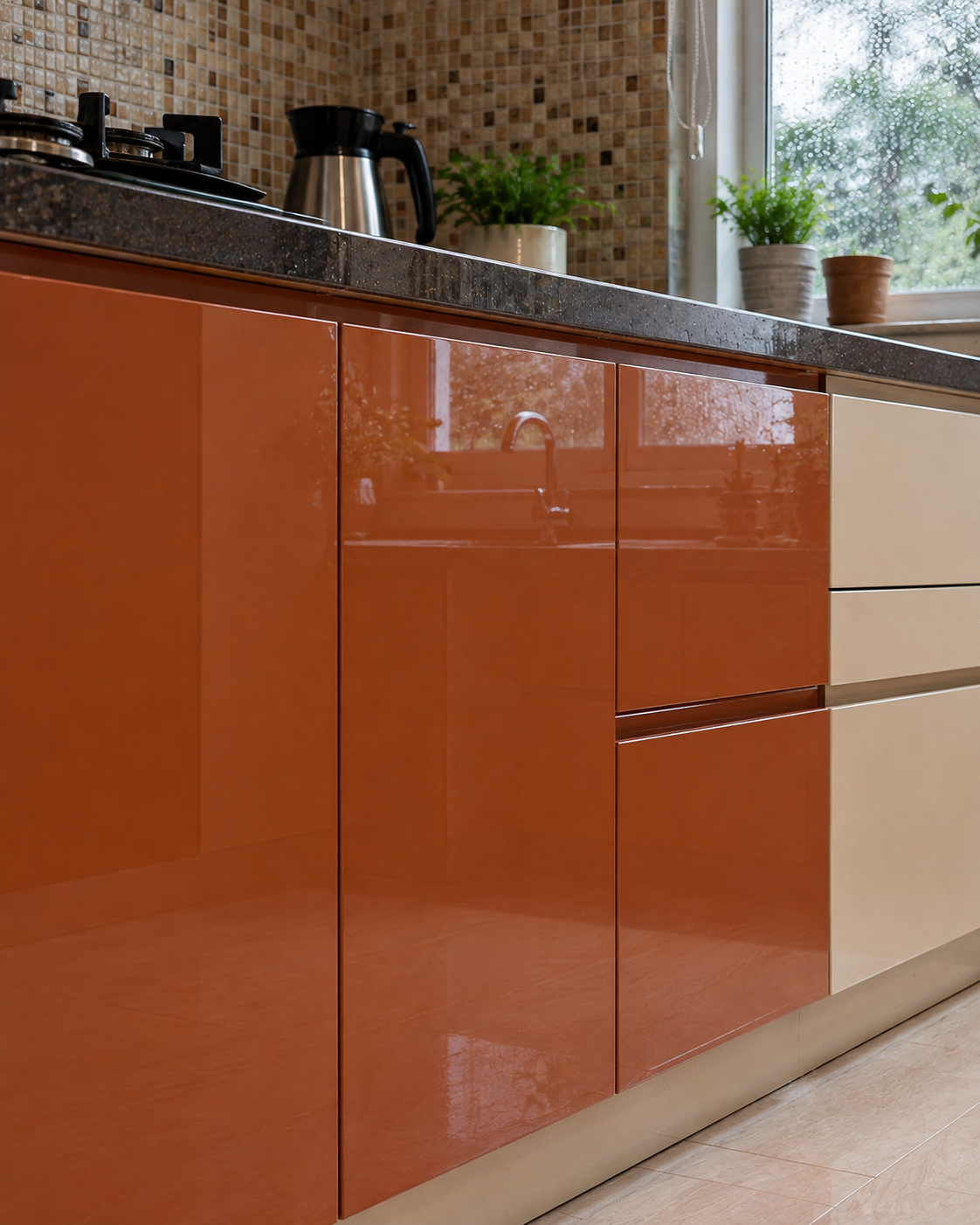
High Gloss is the easiest to wipe down and keeps its shine, which works well for kitchen shutters and wardrobes where you want a clean, modern look. The tradeoff is that it shows fingerprints and dust more in dusty Terai conditions, so it needs more frequent wiping.
Suede Finish is the better pick for most Bhairahawa and Rupandehi homes. The matte, soft-touch surface hides fingerprints and daily wear, and it doesn’t show water spots or humidity marks the way gloss does. It’s a strong choice for bedroom wardrobes, study furniture, and anywhere that gets handled a lot.
Texture Beauty works best for commercial spaces — hotel interiors, office reception counters, statement doors — where you want a tactile, premium feel that also resists visible wear over time.
The local manufacturing advantage
Most premium laminate brands sold in Nepal are imported from India, which means weeks in transit and storage before they even reach a dealer here, often in conditions nobody controls. Laminates absorb ambient moisture during that time too. Because AmbeLam is manufactured right here in Rohini, Bhairahawa, sheets move from production to your furniture maker faster, with far less exposure to uncontrolled storage conditions before installation.
Care tips for Terai conditions
Wipe laminate surfaces with a damp cloth and mild soap or liquid detergent, not abrasive cleaners or wire brushes, which wear down the surface layer over time. During monsoon months, avoid letting standing water sit on any seam or edge for long periods, that’s where moisture finds its way in fastest, regardless of laminate quality. For kitchen shutters exposed to steam, wipe dry after cooking sessions rather than letting condensation sit.
Bottom line
If you’re building or renovating in Bhairahawa, Rupandehi, or anywhere in the Terai, don’t treat laminate as a commodity where any sheet will do. Check the phenolic content, ask for the ISI certification, and match the finish to how the space actually gets used. AmbeLam’s Suede Finish range is our top recommendation for humid, high-use spaces like wardrobes and bedroom furniture, with High Gloss reserved for spaces you’re prepared to wipe down often.
Want to see samples in person? Visit us in Rohini-3, Bhairahawa, or message us for the catalogue.